






01. The Logic Behind the Price Hikes: Not a Desire to Raise Prices, but a Necessity – and with the Leverage to Do So
This round of industry-wide price increases is not a rash decision made by leading enterprises, but an inevitable result driven by upstream cost pressures and supported by downstream demand.
Let's first look at the most direct cost pressure: the core raw materials for cemented carbide tools are tungsten and cobalt. Tungsten-based materials account for over 40% of cemented carbide production costs, while cobalt powder accounts for about 15%. These two are the core variables determining tool prices.
Since the second half of 2024, the supply-demand imbalance in the global tungsten industry chain has intensified. Coupled with factors like policy controls and surging demand, prices of tungsten powder, cobalt powder, and tungsten carbide powder have begun a sustained surge, repeatedly hitting record highs.
From the beginning of 2025 to February 25, 2026, domestic prices for tungsten powder and tungsten carbide powder have both risen by over 400%, while cobalt powder prices have increased by more than 200%.

The sharp rise in upstream raw material prices makes downstream product price increases a standard operation to hedge costs.
But what's truly worth paying attention to is not "why raise prices," but "why can the price increases be successfully transmitted downstream?" — In manufacturing, whenever upstream prices rise, midstream and downstream players usually have to absorb most of the pressure themselves. Very few dare to pass the increase through the entire industry chain.
The reason the tool industry can sustain price increases is highly correlated with its product characteristics and the global competitive landscape.
For downstream automotive plants, machinery factories, and 3C manufacturers, tools are essential consumables in the production process, but they typically account for only 1%-3% of the total product cost.
For example, building a 200,000 RMB new energy vehicle might involve a tool cost of only 2,000 RMB. Even if tool prices rise by 20%, that's an extra 400 RMB, which is negligible for the vehicle manufacturer. However, if they try to save that 400 RMB by switching to unverified tools, leading to substandard machining accuracy or production line stoppages, the loss from just one hour of downtime could be hundreds of thousands of RMB.
This attribute – "low cost proportion, extremely high replacement cost" – results in very low price sensitivity among downstream customers for tools. As long as product quality is reliable, price hikes face almost no resistance.
This is also why, after leading companies announced price increases, downstream orders did not decrease but continued to grow.
02. From Bottleneck to Countermeasure: Has the Spring Really Arrived for Domestic Manufacturers?
Beyond product characteristics, the evolution of the global competitive landscape has also built the intrinsic momentum for price increases.
Many people's impression of the tool industry still remains at the stage of "low-end involution, high-end monopolized by foreign companies." But now, the competitive landscape of the entire industry is undergoing earth-shattering changes.
First, look upstream: we hold the world's most core resources, and our bargaining power is rapidly increasing.Domestic tungsten reserves account for 35% of the global total, and output accounts for over 80%, almost monopolizing the global supply of tungsten raw materials. Moreover, the upstream tungsten mining industry is highly concentrated, with a domestic CR5 (five-firm concentration ratio) exceeding 60%, giving it strong pricing power, which is the core support for the continued rise in tungsten prices.
More critically, in the past, we were "raw material sellers," selling tungsten powder and materials cheaply to Japanese and European manufacturers. They would make high-end tools and sell them back to China at ten times the price. We earned the hardest money, while others pocketed the highest profits. But now, this logic has completely reversed.
In January 2026, China's Ministry of Commerce and the General Administration of Customs jointly issued an announcement, adding high-precision cemented carbide tools and ultra-fine grain cemented carbide materials to the export control list for dual-use items to Japan. This move struck directly at the Achilles' heel of overseas giants.
Japan is the world's second-largest producer of high-end tools. Companies like Mitsubishi Materials, OSG, and Sumitomo Electric hold over 30% of the global high-end tool market share. However, Japan relies on China for over 90% of the tungsten raw materials and ultra-fine tungsten powder needed for high-end cemented carbide production.
Previously, many domestic manufacturers sold high-end powder materials to Japanese companies, who would then make tools and sell them back to China at high prices. Now with controls in place, Japanese companies cannot access high-end powder materials, their production capacity is directly constrained, raw material costs have risen sharply, and they are forced to raise prices.
Domestic leading manufacturers, already possessing a cost-performance advantage, can also seize the market share previously held by foreign companies.
This is why the tool sector experienced a wave of limit-up stock movements immediately after the export control policy was announced – the market understood clearly that this was not a simple policy adjustment, but an accelerator for high-end substitution by domestic manufacturers.
Now look at the midstream: domestic manufacturers have achieved technological breakthroughs, moving from "following" to "grabbing market share," and the landscape is being reshaped.
For decades, the global cemented carbide tool market has been monopolized by four major overseas giants: Sweden's Sandvik, the United States' Kennametal, Japan's Mitsubishi Materials, and OSG. These four companies held over 70% of the global high-end tool market share, leaving domestic manufacturers previously struggling in the mid-to-low-end market.
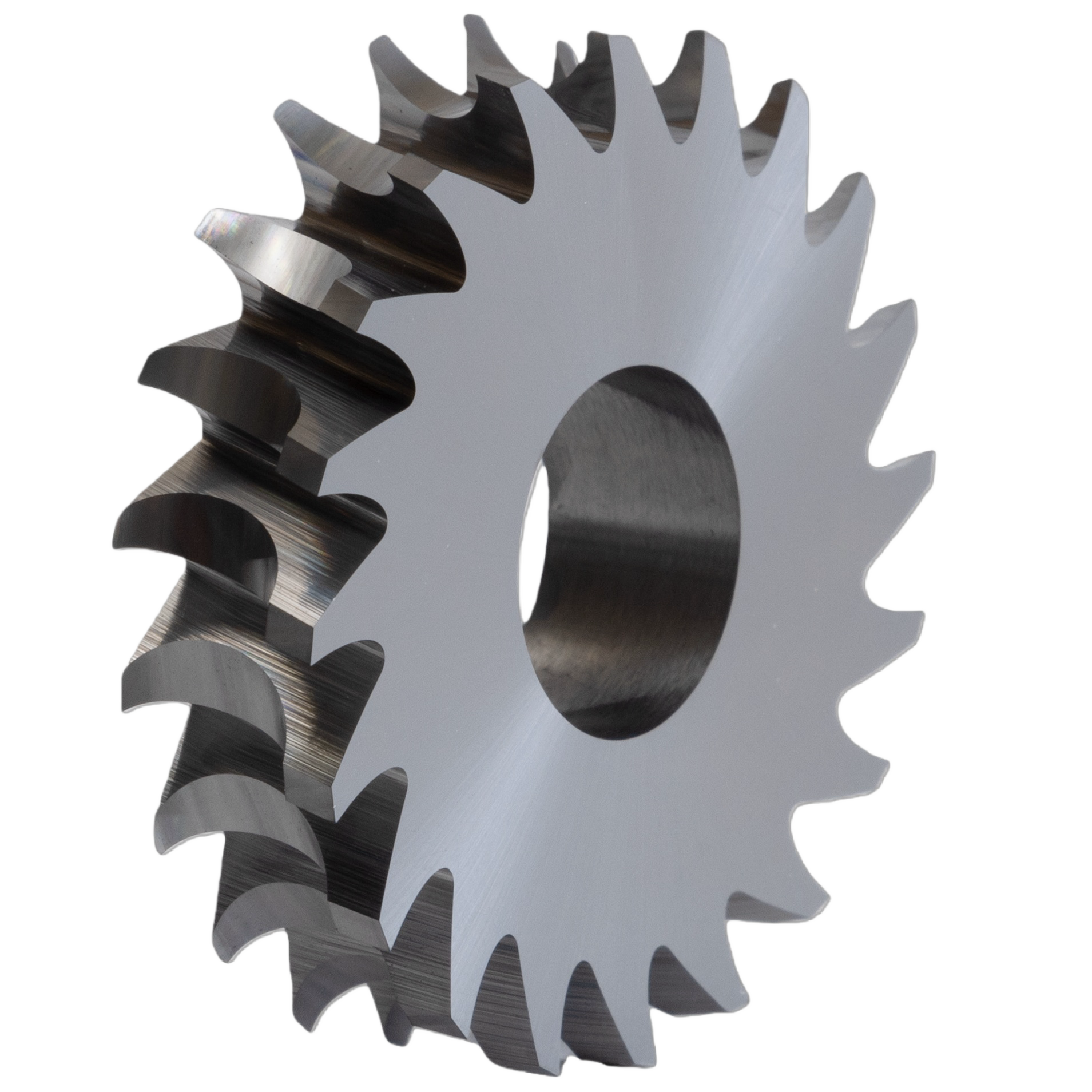
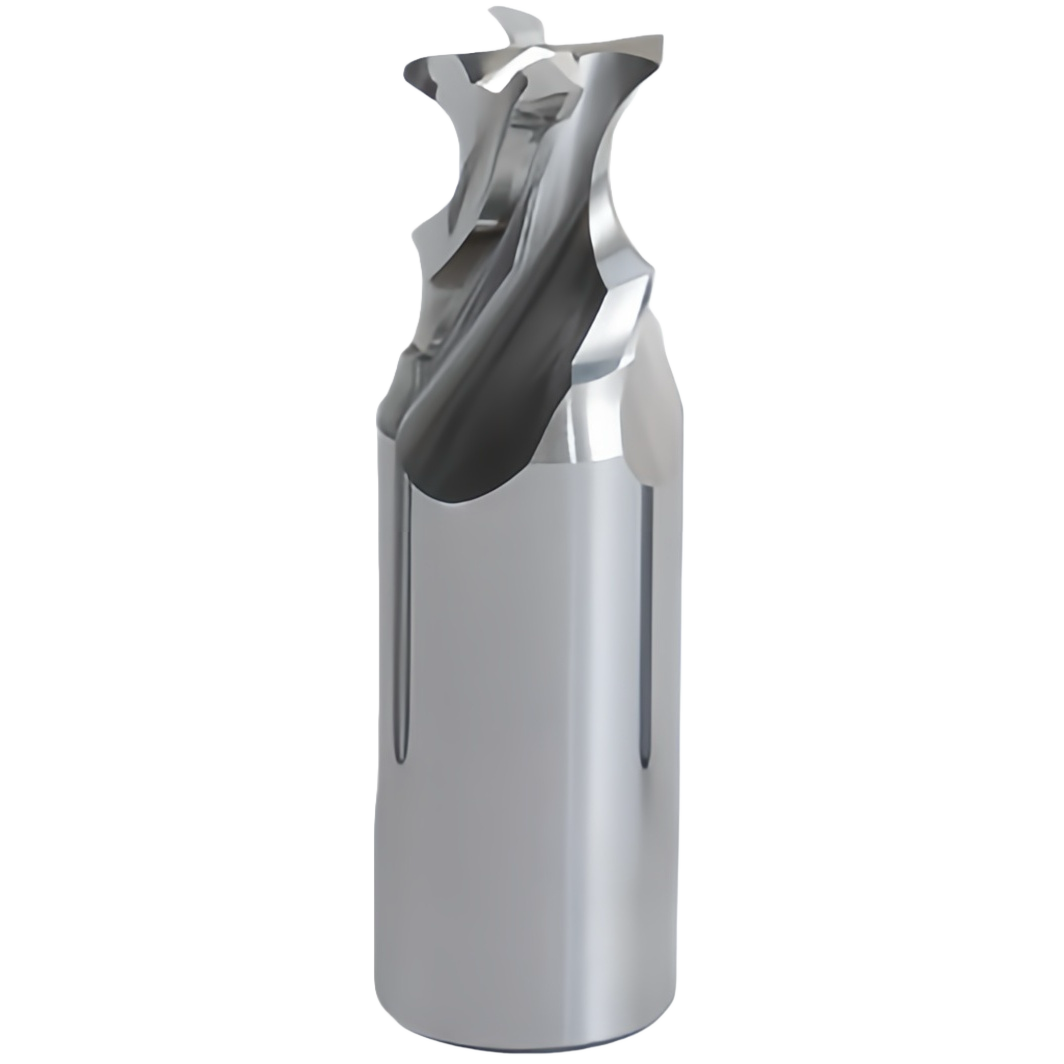
But now, this monopoly is being broken. Domestic leading enterprises, through continuous R&D investment, have achieved breakthroughs in core technologies. For example, the solid carbide end mills from a well-known domestic company have achieved machining accuracy and service life exceeding 90% of comparable Japanese OSG products, but at only 60% of the price of imported ones.
More crucially, in the context of rising raw material prices and export controls, even when domestic manufacturers raise prices, they still maintain a cost-performance advantage over imported products, making downstream customers naturally willing to substitute imports with domestic products.
Finally, look at the downstream customer side: demand is not about recovery, but structural upgrading.
Many people think tool demand simply follows the machine tool cycle – when machine tools go up, tools go up. But now, the demand logic for tools has changed: it's not cyclical recovery, but a structural explosion driven by high-end applications.
The biggest growth comes from new energy vehicles. The tool consumption per new energy vehicle is 2.5 times that of a traditional fuel vehicle. Traditional fuel vehicles have relatively lower machining difficulty for engines and transmissions. In contrast, new energy vehicle components like power battery tabs, motor rotors, and integrated die-casting molds require high-precision, high-wear-resistance high-end tools, which cost 3-5 times more than ordinary tools.
The second largest growth area is aerospace. Titanium alloys and composite structural components in the domestic aerospace field are difficult to machine and require high-end tools that cost 5-10 times more than ordinary tools. Currently, 90% of tools used in aerospace are still imported, leaving significant room for domestic substitution.
Beyond these, demand for high-end tools is also surging in areas like consumer electronics, semiconductors, and humanoid robotics. This high-end demand is not simply "volume growth," but "value enhancement." The price of a single high-end tool is several times or even ten times that of an ordinary tool, generating profit margins that mid-to-low-end products simply cannot match.
03. How to Position Yourself in This Favorable Trend?
Many people ask: the tool sector has already risen so much, can we still position ourselves now? The answer is: the industry's golden development period may have just begun, and the growth space is not yet capped. However, positioning must focus on the main themes and avoid traps.
First, it's crucial to avoid small and medium-sized manufacturers without core technology that only produce mid-to-low-end products. Rising raw material prices will continuously compress their profit margins. They lack pricing power and high-end products, and will only be eliminated by the market in the future.
What's truly worth positioning in are three highly certain main themes:
-
Leading CNC tool manufacturers with strong high-end substitution potential. Their core advantages are strong performance delivery capability, direct benefits from price hikes, and a clear path to high-end substitution. Moreover, the profit increase brought by price hikes will start to materialize in 2026. Key points to watch going forward include: the continuously increasing proportion of high-end products, accelerated overseas market expansion, and economies of scale from capacity release.
-
Leading full-industry-chain players integrating resources and materials. Their core advantage is an integrated industry chain: tungsten mining resources upstream, high-end cemented carbide powder production capacity midstream, and tool business downstream. This gives them the strongest cost control capability. They can maximize benefits from rising tungsten prices while also benefiting from the domestic substitution of high-end powder materials.
-
Hidden champions in bottleneck areas. These are primarily companies in supporting segments like tool coatings and precision tool holders. Many people don't know that tool performance is 70% material and 30% coating. A tool's service life and machining accuracy largely depend on its surface coating technology. Previously, over 90% of the domestic high-end coating market was monopolized by foreign companies, representing the biggest bottleneck in the tool industry. Now, domestic companies have broken through technologies like diamond coatings and cubic boron nitride coatings, creating huge potential for domestic substitution.
For ordinary investors, there's no need to be greedy. Focusing on the core targets within these three main themes, and tracking performance delivery, the proportion of high-end products, and customer expansion progress, will allow you to grasp the industry's deterministic opportunities.
However, considering that core targets in the sector have seen significant short-term gains, which may already fully reflect optimistic market expectations, subsequent investments require vigilance against multiple risks:
-
Risk of raw material price fluctuations exceeding expectations: If tungsten prices continue to surge sharply, it could significantly erode the profit increment brought by price hikes.
-
Risk of policy changes: The industry's prosperity partly benefits from policies like export controls to Japan and tungsten mining quota management. If relevant policies are adjusted in the future, such as relaxing export controls or increasing mining quotas, it would alter the industry's supply-demand landscape.
-
Risk of high share price volatility: Some targets have seen substantial gains, and their share prices may already fully reflect optimistic expectations like price hikes and domestic substitution. If subsequent performance delivery falls short of expectations, it could easily trigger significant share price corrections.
04. Conclusion
We constantly chase the "star tracks" of high-end manufacturing, yet often overlook that what truly supports the upgrade of the manufacturing industry are these unassuming "foundational consumables."
Without breakthroughs in the precision of cemented carbide tools, even the most advanced machine tools would struggle to realize their value; without the breakthrough of domestic tools in substitution, the supply chain security of high-end manufacturing would be impossible to guarantee.
From being constrained by overseas giants to proactively raising prices and seizing the high-end market, the rise of domestic cemented carbide tools is not only the comeback of a single sector but also a vivid microcosm of Chinese manufacturing's transformation from "big" to "strong."
Gelonghui Research Institute has been deeply involved in high-end manufacturing industry chain research, continuously tracking the cemented carbide tool industry for many years. We have always believed that true investment opportunities never lie in the noisy hotspots, but in those tracks that are quietly growing and consistently creating value.
Currently, the favorable wind has arrived for the cemented carbide tool industry. The benefits of price hikes are continuously materializing, domestic substitution is accelerating, downstream demand is surging, and the certainty of the industry's growth is self-evident.
Note: The companies mentioned in this article are used solely for industry case analysis and do not constitute any investment advice. Market investments carry risks, and caution is required.
Special Statement: This article is uploaded and published by the author on the "NetEase Hao" self-media platform of NetEase. It represents the views of the author only. NetEase merely provides a platform for content publication.
Source: Gelonghui